Introduction to Oom Yung Doe
Learning Environment
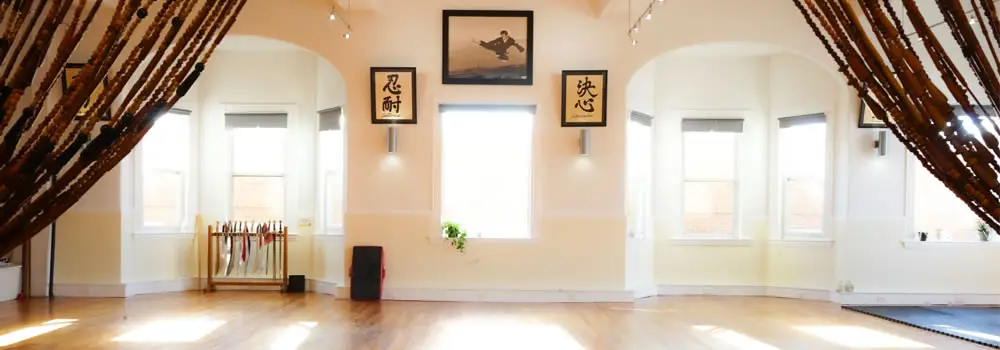
The essence of traditional martial arts is self-development and self-development is rooted in self-respect. For this reason, a traditional martial arts school emphasizes an atmosphere of respect. All practitioners, whether beginning students or more advanced instructors, are constantly learning and training to improve.
As a place of learning, Oom Yung Doe schools have certain protocols conducive to creating a positive environment. Your instructors will educate you on various traditions, and the meaning behind each one, but here are a few practices observed in school.
Uniform and Belt Care
All instructors and students in an Oom Yung Doe school wear uniforms. Beginning uniforms and belts are white, and as a student develops martial arts skill, the belt and uniform progressively show more black. In traditional martial arts, black is a symbol of knowledge.
Historically and today, a practitioner’s belt is a representation of efforts toward martial arts development. As such, one’s belt is handled with respect. It is never washed, and never placed on the ground. When not being worn, a practitioner’s uniform should be handled with care. Your instructor can explain further.
Tying Your Belt
The six images below explain how to correctly tie your belt.
Timely Lesson Arrival
Whenever possible, arrive before your lesson time such that you can be in uniform and in the practice room at least 5-10 minutes before the lesson begins. If you need to arrive late or leave early, that is fine, but in general, it is best to experience each lesson as a whole.
Each part of a group lesson has a specific purpose, whether it is to increase internal oxygenation, accelerate circulation to warm up muscles and joints, practice key forms for full body or specific skills development, apply techniques to self-defense, or meditation. The lesson is planned as a whole and meant to be experienced in that way.
Bowing
A bow is a form of greeting, a way to show respect, and a time to set your focus, depending upon the circumstance. We all have limited time for self-development, and bowing is in part a mental practice to acknowledge the importance of developing mind and body. It helps bring mental focus to this pursuit.You will see different forms of bows within a school, depending upon practitioner rank. A beginning student bows with his or her feet together, arms to the side, and each hand in a fist. When bowing to an instructor or another student, slightly nod your head, but maintain eye contact.
Proceed directly to the office doorway and bow to the flags and the instructor to say hello (if present). While bowing to the flags, take a moment to clear your mind and focus on your training opportunity – the time anyone has for self-improvement is limited, and preparing mentally to do your best is an important habit to develop.
First bow to the flags on the wall and then to the instructors and students in the practice room.
The instructor will guide everyone in bowing to the flags, instructors, and fellow students. This focuses everyone on the lesson, shows respect and acknowledgment to the instructor as the individual who will be passing knowledge for everyone’s mental and physical improvement, and shows mutual respect to other students.
The same bowing procedure as the beginning of the lesson occurs and then students thank the instructor for the lesson.
Stop at the exit and bow to the flags, instructors, and students before exiting.
Step over to the office and bow to the flags and the instructor, if present. Take a moment to reflect on what you have gained.
True respect is not shown with a posture or words but through efforts to improve. The best way to show respect and gratitude is to take the knowledge passed, practice it, and strive to absorb it.
Physically Learn
Power
Control
Flexibility
Coordination
Mentally Learn
Patience
Discipline
Confidence
Determination